Yet research shows that when given the opportunity, employees with disabilities demonstrate equal or higher performance, greater loyalty, and longer tenure (Accenture, Getting to Equal: The Disability Inclusion Advantage, 2018).
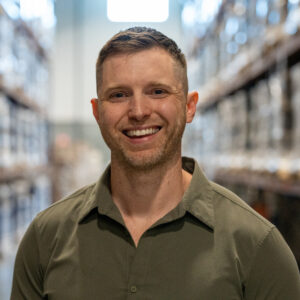
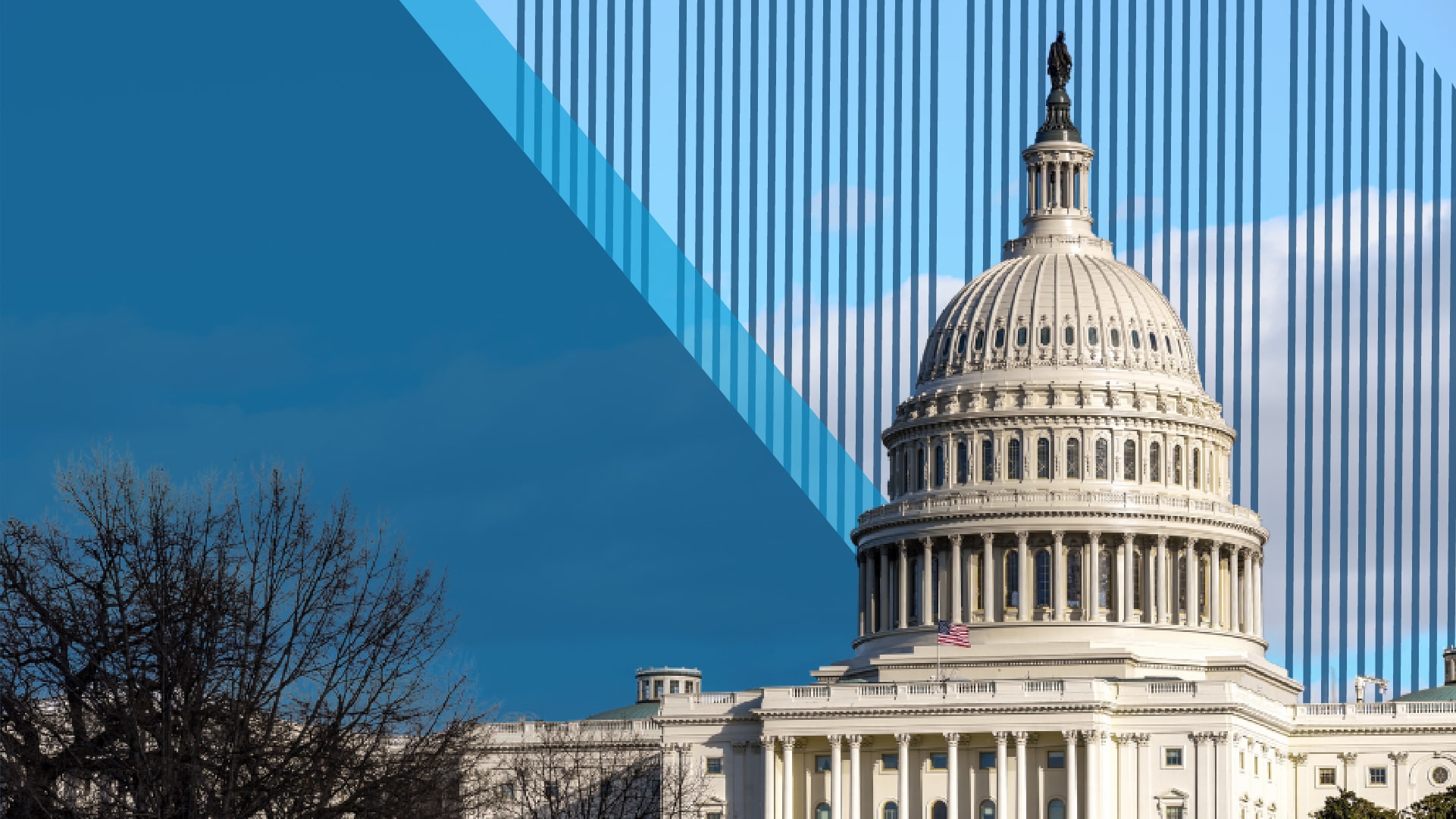
The transcript below comes from recent congressional testimony on the theme “Tapping Untapped Talent in America.” It features Nautical’s Chief Operating Officer, Jarrod Sanderson, alongside lawmakers and other stakeholders, highlighting both the challenges and opportunities in disability employment.
Transcript of Jarrod’s Remarks to the Subcommittee
Opening Testimony
(cleaned and formatted for readability)
Speaker: Now I’d like to turn to Jarrod Sanderson for you to make your opening remarks, and please limit your remarks to five minutes.
Jarrod Sanderson: Thank you, Chairman Estes, Representative Carey, Ranking Members Larson and Davis, and distinguished members of the subcommittee.
Before I get started, I want to say, Chairman Estes—while I live in Missouri, the work that I’ve done and that I’m going to talk about happened in Kansas. So hopefully you’ll give me some grace and not hold it against me where I reside.
My name is Jarrod Sanderson. I come to you today wearing two hats. I started my career—cut my teeth—in the social service world as a licensed clinical social worker. I worked in that space for 18 years in just about every program you can imagine: foster care, senior care, veteran care. I represented the United States Department of State as a Fulbright Scholar in South Africa working on homeless prevention—that was the first 18 years.
I then pivoted to the for-profit world, where I served as the COO for Nautical Manufacturing & Fulfillment and a Managing Partner for Staffing by Starboard, a sister staffing company for Nautical. I want to talk about both of those experiences because they’re both very relevant. First, I’ll share from the social service perspective, and then pivot to the reason I was invited today, which is to offer the employer’s perspective on hiring people with disabilities.
On the nonprofit side, I am a firm believer in social entrepreneurship. I think businesses that place their purpose at the center—the intersection—of market demand and social need can do a whole lot of good. They can harness the power of markets while also meeting social demands in ways that traditional programs often cannot.
I sit on two boards in Kansas City that do this very well. One is Pawsperity. We train homeless moms in dog grooming and then place them in salons throughout the city—and we’ve opened our own salon. Most of the women we work with have long histories of poverty and trauma. The crushing impact of that generally leads to a diagnosed disability, most often on the mental health side. That’s social entrepreneurship creating pathways to employment for people with disabilities.
The other board is Reconciliation Services, located at 31st and Troost—the historic racial dividing line in Kansas City. They are working on community healing and also have a strong social entrepreneurship and workforce focus. Again, many of the individuals they serve have diagnosed mental health disabilities stemming from lifelong poverty and trauma.
There is so much talent being wasted simply because people are spending all their energy trying to survive. When survival consumes your focus, it’s extremely difficult to engage in workforce programs, even when funding is available. That’s why we must address the root causes that keep people from participating in the workforce in the first place.
My core message today is this: it is not charity to hire people with disabilities—it is a sound business strategy. There is tremendous upside. The data and research support this. The talent isn’t untapped because of a lack of skill or desire—it’s untapped because of outdated perceptions and systemic barriers. These barriers exist not out of malice, but because incentives don’t align. Fortunately, things are changing as we learn more about the space we’re working in today.
I want to focus on one broad category of disability: mental health. Others here today can speak more comprehensively about developmental and physical disabilities.
Before I wrap up, I want to note that the benefits cliff is a very real issue. Depending on the state, Medicare, Medicaid, or childcare subsidies can create an “all-or-nothing” effect. That makes it difficult for someone to enter at an entry-level job and then advance. Housing and transportation challenges also compound this problem, especially for people with disabilities.
Finally, I want to share our experience at Nautical Manufacturing & Fulfillment with Down Syndrome Innovations, an organization in Lenexa, Kansas. Like every 3PL, we face challenges with seasonal work. We partnered with Down Syndrome Innovations to hire their self-advocates. To date, we’ve hired 35 of their individuals, and they are exactly the kinds of employees any business is looking for: engaged, consistent, and passionate about their work.
The result? Throughput in production has increased, and the number of smiles in our building has increased as well. It’s not just heartwarming or the “right thing to do”—it’s a very sound business strategy.
This is a huge topic, but I’ll stop here. I believe there are millions of people who are ready to be committed, loyal, engaged, and growth-minded. They just need a pathway. I appreciate the opportunity to share today, and I thank you for hosting this hearing so we can discuss these important issues.
Questions and Answers Session
(cleaned and formatted for readability)
Speaker: Mr. Sanderson, reading through your testimony, I think you said most of it, but one of the recommendations is for us to look at ways to encourage public and private partnerships, so there is more of a collaborative model to benefit employers, the community, and employment agencies—like the one that Ms. Walsh runs. What changes would that involve, or how would that look in practice?
Jarrod Sanderson: Yeah, I think there are probably several ways to do it. There’s movement that needs to happen on both sides—and it’s not an either/or.
Some employers simply aren’t fully educated on the benefits of working with organizations that are helping people with disabilities find jobs.
I know the term “disability” can feel limiting—some organizations even use “diversability.” It’s not just a novelty. There are extraordinary abilities in people who’ve experienced hardship. While it’s unfortunate those hardships happened—often without good reason—the individuals who make it through are often exactly the kind of employees someone is looking for.
So I think the first opportunity is to educate employers about the organizations in their area. A lot of employers just don’t know they exist—not because they don’t want to, but because they’re busy, heads down, trying to grow their business. They may not realize there are organizations training people specifically for their industry. Awareness changes everything. Once you know, you can’t unknow it.
I was fortunate to come into the for-profit world already knowing these organizations and the services they provide. If I had to pick one starting point, I’d say: educate employers on the organizations around them that are already building workforce pipelines they don’t even know about.
Speaker: Let’s go back to you, Mr. Sanderson. It’s clear that American businesses want to hire and promote the best person for the job. But we’ve heard today that for those receiving disability insurance benefits, it’s not simple to say “yes” to a new job, the next promotion, or more hours. How should employers navigate these rules? And if the program were simpler, would employers be more effective at providing opportunities?
Jarrod Sanderson: Thank you for the question. The short answer is “yes.” Anything simpler makes decision-making easier.
Part of the problem is how difficult benefits are to understand. I’ve experienced situations where someone was telling me something about their benefits, and it was hard to know if it was accurate. I wasn’t the one receiving the benefit, and even if I tried to look it up, I might be in a worse position to find the right answer than they were.
So it creates challenges at both ends. Employers struggle to navigate it, and some people are hesitant to share information because sharing in the past led to being denied a job or even losing one.
Simplification is crucial. Demystifying these programs makes it easier for employers and ensures the information flowing from recipients is more accurate. So, yes—simplification would be extremely helpful for both employers and recipients.
Speaker: In my congressional district and across the country, industries are struggling to meet workforce needs. You mentioned in your testimony that your involvement came through an innovative partnership—not out of corporate social responsibility, but out of, quote, “a clear-eyed assessment of our business needs seeking a pool of qualified, dedicated individuals, and we had roles that needed to be filled.”
Since this hearing is titled Tapping Untapped Talent in America, how can empowering those with a broader spectrum of abilities help spur economic capacity and meet workforce challenges?
Jarrod Sanderson: Our relationship with Down Syndrome Innovations is a good example. It’s really a proxy for broader principles that apply across industries.
In the light industrial space—pick, pack, kitting, de-packing, repacking—we have a lot of seasonal work tied to holidays. That makes it difficult to maintain a consistent workforce, so we rely heavily on temp services. Those temp pools often include people who can’t access direct employment because of their backgrounds.
With Down Syndrome Innovations, we immediately benefited from their large pool of candidates, each with different schedule needs. That flexibility allowed us to handle seasonal surges without worrying about full-time commitments when we only needed three weeks of work. That’s a huge challenge in our space—and I’m sure it’s true elsewhere.
Another benefit is quality control. For example, if you tell someone, “Find every dented can,” some individuals will not miss a single one. Others may be distracted. In certain roles, these abilities are superior to conventional labor.
At first, our supervisors were hesitant—worried about saying the wrong thing. DSI helped by reminding us their self-advocates wanted the same experience as everyone else. Once supervisors understood that, they quickly shifted from hesitant to saying, “I only want to work with this team.”
This isn’t a monolith, of course, but in general, people bring a unique perspective—one that fits extremely well with a culture of learning and growth. This talent is truly untapped, and it doesn’t need to be.
Speaker: My question is this: we need workers. In my home state of Florida, we have 100 jobs and only 88 people to fill them. Mr. Sanderson, your organization found a hidden gem by hiring people receiving SSI and SSDI to help address the worker participation crisis. Can you explain the benefits—and quickly, please, we’re in lightning round.
Jarrod Sanderson: I’ll be quick. The basic idea is aligning needs. Employers want people who are engaged, consistent, reliable, and contribute to a positive culture. That’s exactly what we’ve found.
Speaker: And it’s not charity. They’re getting value, you’re getting value, and that’s the way it should work. You’ve discovered the hidden gold mine, right?
Jarrod Sanderson: Yes, I think so.
Speaker: Mr. Sanderson, let me turn to you again. Many employers want to hire individuals with disabilities. In your written statement, you said, quote, “We addressed critical staffing challenges while our employees gained purpose, fulfillment, and economic independence.”
The work that Nautical Manufacturing & Fulfillment is undertaking is amazing—so thank you. You and your company are helping individuals find their purpose, a place of value in the community, and economic independence. That’s what we want for everyone.
But you also said, “Many employers want to hire individuals with disabilities, yet many beneficiaries don’t feel that’s the case.” How do you explain that disconnect?
Jarrod Sanderson: A lot of it comes from misunderstanding and confusion about what changes when someone starts working.
It feels good when you earn more money. But if, at the same time, a support benefit disappears, then while income went up, expenses did too—and day-to-day life may not have improved. Some people may even have a deficit despite earning more.
Most jobs start at entry level. At that salary, people may lose cash or expense assistance, making the jump very difficult. In some industries, you’d have to start at $80,000–$100,000 to offset the loss. That’s a hard ask for both employees and employers.
Some programs don’t work that way, but the perception is that they do—and in some cases, they actually do. So confusion abounds.
On top of that, some employers are too focused on short-term challenges to invest in long-term workforce strategies. But if they did, they’d see stronger retention and better margins over time. It’s just a tough pitch when short-term pressure is high.
Key Takeaways From Jarrod’s Testimony
1. Employer Education Is Essential
One of the clearest points from the testimony is that employers often don’t know what resources exist in their own communities. Across the U.S., nonprofit and workforce development organizations provide pre-training, coaching, and placement services for individuals with disabilities. Yet many employers remain unaware—not because of unwillingness, but because they are focused on running their business. Their “heads are down,” as Mr. Sanderson put it, and they may not have time to seek out these connections.
Closing this awareness gap is a low-cost, high-impact step. According to the U.S. Department of Labor’s Office of Disability Employment Policy (ODEP), employers who engage in partnerships with community organizations report reduced recruitment costs and higher retention rates (U.S. DOL ODEP, 2023). For example, Down Syndrome Innovations in Kansas City develops job-readiness programs specifically tailored to logistics and light industrial roles. When employers become aware of these pipelines, they gain access to pre-vetted, job-ready candidates who are trained for their industry—often at little or no cost to the employer. Awareness is the tipping point: once an employer sees the quality of these candidates, inclusive hiring is viewed as smart business strategy, not charity.
2. Simplification of Benefits Encourages Work
The complexity of Social Security disability benefits (SSI and SSDI) creates one of the greatest barriers for individuals seeking work. Many recipients worry that taking a job or promotion could lead to an abrupt loss of financial or medical support. As a result, talented individuals may hesitate to pursue opportunities—even when they are motivated and capable. According to the Social Security Administration (SSA), over 7.5 million Americans receive SSDI benefits, and more than half report that fear of losing benefits is a barrier to employment (SSA, 2024 Annual Report).
Simplifying these programs would create a win-win scenario. Research from the National Council on Disability has shown that streamlining work incentive programs leads to higher workforce participation among people with disabilities (NCD, 2020). For recipients, clarity would make it easier to pursue jobs and promotions without fear of losing critical support. For employers, it would reduce the administrative complexity of hiring individuals with disabilities, since conversations about benefits could be more straightforward and accurate. In short, simplification encourages labor participation, reduces confusion, and unlocks untapped talent for employers.
3. Disability Inclusion Meets Real Business Needs
Inclusive hiring is not about “checking a box”—it’s about solving pressing business challenges. Many sectors, especially logistics, manufacturing, and retail fulfillment, struggle with roles that require consistency, attention to detail, and reliability. Employees with disabilities often excel in these areas. A landmark study by Accenture found that companies that champion disability inclusion outperform peers, achieving 28% higher revenue and 30% greater profit margins than their less inclusive counterparts (Accenture, Getting to Equal: The Disability Inclusion Advantage, 2018).
This directly addresses employer needs. In industries where mistakes can mean lost revenue or dissatisfied customers, having a workforce with extraordinary attention to detail is a competitive advantage. Moreover, inclusive hiring often reduces turnover. The Job Accommodation Network (JAN) reports that 90% of employers say workers with disabilities perform equal to or better than peers, and most accommodations cost nothing (JAN, 2022). For businesses managing thin margins, those savings can be significant. Inclusion isn’t just socially responsible—it drives measurable business performance.
4. Cultural Shifts Follow Practical Success
Cultural change doesn’t happen through slogans—it happens through experience. Many supervisors and managers may initially feel uncertain about working with individuals with disabilities, fearing they might say the wrong thing or lack the right skills to support them. But as Nautical’s testimony highlighted, once supervisors worked alongside self-advocates from Down Syndrome Innovations, their perspective quickly shifted from hesitation to advocacy. Some even began requesting to work only with those teams.
This shift is powerful because it changes workplace culture from the inside out. According to Harvard Business Review, inclusive teams are 17% more likely to report high performance and 29% more likely to demonstrate team collaboration (HBR, 2020). When teams see firsthand the reliability, commitment, and skill of their colleagues with disabilities, they begin to value inclusion as a strength. Over time, this creates stronger collaboration, higher morale, and better retention. Inclusive hiring doesn’t just fill roles—it strengthens the social fabric of a company and becomes a magnet for both talent and customers.
5. A Strategic Solution to Labor Shortages
The U.S. is in the midst of a worker participation crisis. As of 2025, there are only 88 available workers for every 100 open jobs (U.S. Chamber of Commerce, Worker Shortage Index, 2025). Industries like logistics, healthcare, and hospitality are among the hardest hit, reporting record vacancy rates. Against this backdrop, employers cannot afford to overlook the millions of working-age adults with disabilities who want to work but face barriers to entry.
Tapping this talent pool is a practical solution to an urgent economic problem. A 2020 report by The Valuable 500 found that closing the disability employment gap could add $13 trillion to global GDP over the next decade (The Valuable 500, 2020). Beyond filling roles, inclusive hiring strategies strengthen long-term workforce resilience, reduce dependency on costly temp labor, and build stronger brand reputation. Today’s consumers and investors increasingly reward businesses that demonstrate inclusion and community impact. Hiring individuals with disabilities is not just a moral good—it is a competitive necessity for companies seeking to thrive in a tight labor market.
Conclusion
The message from Congress and from businesses like Nautical is clear: America cannot afford to leave talent on the sidelines. Inclusive hiring is not a social responsibility add-on—it is a critical strategy for solving workforce shortages, driving innovation, and building stronger communities.
At Nautical Manufacturing & Fulfillment, our partnership with Down Syndrome Innovations has proven the business case firsthand. By integrating self-advocates into our workforce, we’ve filled critical roles, improved retention, and strengthened our culture—all while creating meaningful opportunities for individuals with disabilities.
If you’re looking for a logistics partner who not only improves your supply chain performance but also invests in untapped sources of labor in the community, Nautical Manufacturing & Fulfillment is that partner. Our inclusive hiring practices help lower costs, strengthen teams, and build a more resilient local workforce—benefits that extend far beyond the warehouse floor.