
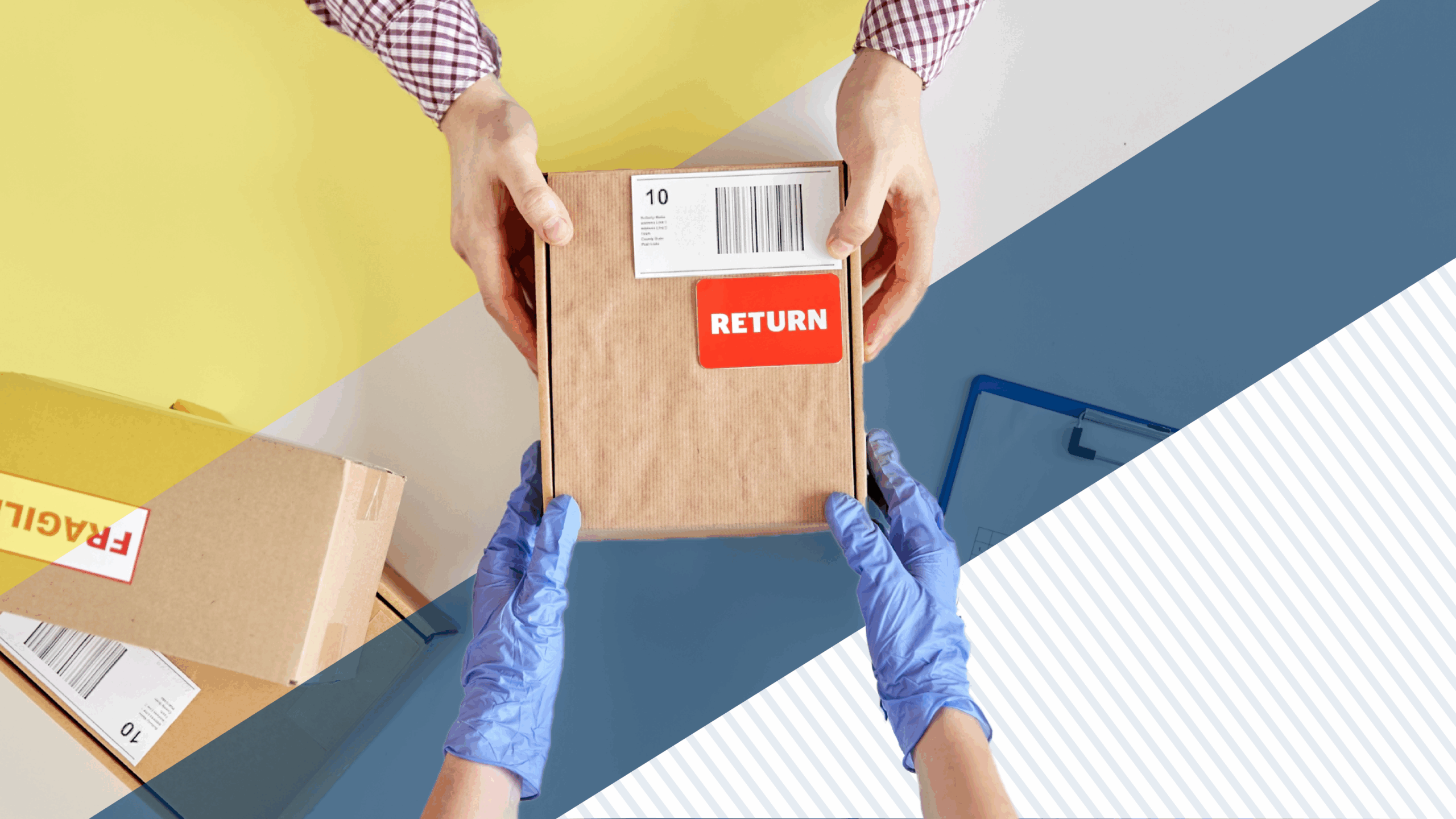
Today, returns are no longer the exception, they’re an expectation. As online shopping continues to surge, reverse logistics, the process of moving goods from customers back to sellers, has become a critical component of supply chain management. Unfortunately, it’s also one of the most complex and costly.
That’s where third-party logistics providers (3PLs) come in. With their infrastructure, technology, and specialized expertise, 3PLs are uniquely positioned to simplify and streamline reverse logistics for businesses of all sizes. Whether you’re dealing with returns, repairs, recycling, or refurbishing, a strong reverse logistics system can protect your margins and build customer loyalty. In this blog, we’ll dive deep into how 3PLs help streamline reverse logistics, the challenges of managing returns in-house, and the long-term benefits of outsourcing reverse logistics to a trusted logistics partner.
What Is Reverse Logistics?
Reverse logistics refers to the process of moving goods from their final destination, typically the customer, back to the seller or manufacturer for return, repair, refurbishment, recycling, or disposal. Unlike traditional logistics, which focuses on the movement of products from the warehouse to the customer, reverse logistics handles the opposite flow. It includes a wide range of activities such as processing returns, managing product recalls, reusing packaging, repairing damaged goods, and disposing of end-of-life products. This process plays a crucial role in maximizing product value, minimizing waste, and maintaining customer satisfaction.
As e-commerce and omnichannel retail continue to grow, reverse logistics has become increasingly important. Consumers expect fast, easy, and free return options—often seeing returns as part of the overall shopping experience. According to the National Retail Federation, retailers say over $743 billion worth of merchandise was returned in the U.S. in 2023 alone. Without a structured and efficient reverse logistics system in place, businesses risk high operational costs, excess inventory buildup, and a negative customer experience. By prioritizing reverse logistics, companies can recapture lost value, strengthen brand loyalty, and improve their overall supply chain efficiency.
Key Challenges With Reverse Logistics
Reverse logistics is complex, unpredictable, and expensive when not handled properly. Below are the core challenges that businesses face when managing returns internally or without a dedicated system:
1. Unpredictable Return Volumes
Unlike outbound shipments that follow seasonal forecasts or planned sales cycles, returns happen sporadically and often peak after major sales periods or product launches. This irregularity makes it difficult to plan warehouse labor, transportation, and storage capacity effectively.
Retailers expect returns to spike up 17% after peak shopping seasons like Q4, requiring companies to double or triple their normal returns staffing temporarily.
2. Inconsistent Product Conditions
Returned items can arrive in drastically different states—unopened, used, damaged, missing components, or completely unsellable. Because of this inconsistency, every item must be individually inspected, evaluated, and routed accordingly.
This manual process increases handling time and often results in delays in restocking or refunds, harming customer satisfaction and reducing item recovery rates.
3. High Processing and Labor Costs
Reverse logistics often lacks the automation used in outbound fulfillment. Tasks such as sorting, refurbishing, repackaging, and documenting returns require manual labor, which increases cost per return. When this process is handled inefficiently, it can result in bottlenecks and excess operational expenses.
4. Warehouse Congestion
Returned products can pile up in docks, staging areas, or racking systems if they’re not moved through a defined process. This creates clutter, disrupts normal fulfillment operations, and reduces space for incoming inventory or order prep.
Inefficient reverse logistics can take up 15-20% of a warehouse’s usable space during peak seasons, leading to increased costs or the need for overflow storage.
5. Customer Expectations & Experience
In today’s Amazon-influenced world, customers expect fast, easy, and often free return options. They also expect prompt refunds or exchanges. Failing to meet these standards can result in negative reviews, lost loyalty, and decreased repeat business.
6. Disposal & Regulatory Compliance
Products like electronics, batteries, pharmaceuticals, cosmetics, or hazardous materials often require strict regulatory handling for recycling or disposal. Non-compliance can lead to fines, environmental harm, or brand damage.
The U.S. Environmental Protection Agency (EPA) requires companies to follow detailed protocols for disposing of e-waste and other regulated materials. Failure to do so can lead to fines up to $70,000 per violation.
7. Inventory Visibility and Data Gaps
When reverse logistics isn’t integrated into your WMS or ERP system, items can sit unaccounted for. This affects inventory accuracy, reordering decisions, and financial reconciliation. It also reduces the ability to extract insights from return patterns.
Without proper tracking, businesses often suffer from over-ordering, lost products, or missed opportunities to resell returned items.
8. Return Fraud and Abuse
Some customers exploit lenient return policies by sending back used, damaged, or entirely different products. Others abuse policies like “wardrobing” (buying with the intent to use once and return). This fraud adds hidden costs and inventory complications.
The National Retail Federation estimated $101 billion in return fraud losses for U.S. retailers in 2023 alone.
Common Industries That Use Reverse Logistics
Reverse logistics plays a vital role in several major industries—particularly those with high product volume, fast inventory turnover, or strict quality and compliance standards. Below is a breakdown of the most common sectors where reverse logistics is essential:
- E-Commerce & Retail
- High return rates due to sizing issues, customer preferences, or damaged goods
- Frequent need for restocking, repackaging, and resale of returned merchandise
- Customer satisfaction relies heavily on fast and easy return experiences
- High return rates due to sizing issues, customer preferences, or damaged goods
- Consumer Electronics
- Complex returns involving testing, repairs, or refurbishment
- Warranty claims, trade-in programs, and recycling mandates
- Critical need for data wipe and safe disposal of components
- Complex returns involving testing, repairs, or refurbishment
- Apparel & Footwear
- Extremely high online return rates (30–40%) due to fit and fashion preferences
- Returned items often need re-tagging, steaming, or repackaging before resale
- Seasonal inventory often reallocated or liquidated via reverse channels
- Extremely high online return rates (30–40%) due to fit and fashion preferences
- Automotive & Machinery
- Core part returns for reconditioning and resale (e.g., engines, transmissions)
- Warranty part replacements, defect analysis, and supplier credits
- Large, heavy items requiring efficient transport and tracking
- Core part returns for reconditioning and resale (e.g., engines, transmissions)
- Healthcare & Pharmaceuticals
- Strict regulatory handling for expired, recalled, or damaged products
- Return and destruction processes must meet FDA or DEA compliance
- Disposal of biohazards or expired drugs must be documented and secure
- Strict regulatory handling for expired, recalled, or damaged products
- Industrial & Manufacturing
- Equipment or parts returned for failure analysis, repair, or warranty support
- Reuse and recycling of materials to reduce waste and control costs
- Tool calibration and component lifecycle tracking via return cycles
- Equipment or parts returned for failure analysis, repair, or warranty support
- Food & Beverage
- Returns due to spoilage, recalls, or incorrect shipments
- Need for rapid inspection and safe disposal to avoid contamination
- Temperature-sensitive returns require specialized handling
- Returns due to spoilage, recalls, or incorrect shipments
- Telecommunications
- Device returns (phones, routers, modems) after contract terminations or upgrades
- Refurbishment and resale of returned tech via secondary markets
- SIM cards and batteries require secure and compliant disposal
- Device returns (phones, routers, modems) after contract terminations or upgrades
- Furniture & Home Goods
- Bulky returns that are expensive to ship and difficult to resell
- Often require inspection, repair, or resale as open-box/clearance items
- Coordination of freight logistics for reverse movement
- Bulky returns that are expensive to ship and difficult to resell
How 3PLs Can Support Reverse Logistics
Third-party logistics providers (3PLs) bring specialized expertise, scalable infrastructure, and integrated systems that help businesses manage the complexities of reverse logistics more efficiently. Here’s how 3PLs make a measurable impact across every step of the returns journey:
Dedicated Returns Processing Infrastructure
One of the most fundamental advantages of working with a 3PL is access to physical infrastructure built for reverse logistics. Most 3PLs allocate a specific zone of their warehouse exclusively for returned goods. This space is optimized for intake scanning, physical inspection, sorting, and staging for repackaging or disposal. These return zones are staffed by trained teams who know how to quickly assess items and determine their next step.
For example, instead of returned goods piling up near a shipping dock or being handled by the same team processing outbound orders, a dedicated area allows reverse items to be triaged immediately upon arrival. This separation also helps avoid errors like mixing returned inventory with sellable stock, a problem that can easily occur in understaffed or unstructured internal warehouses.
Over time, having a defined workflow and physical layout designed for returns leads to faster processing, lower error rates, and better customer outcomes.
Standardized Inspection and Grading Processes
In reverse logistics, not every product should be treated the same. Some items can go right back on the shelf, while others may require minor repairs, and some must be scrapped altogether. 3PLs solve this challenge with a standardized inspection process that assigns clear grading categories to each returned item based on predefined criteria such as packaging condition, usability, defect level, and resale potential.
For instance, a returned electronic device might be evaluated on whether it powers on, whether all accessories are present, and whether any cosmetic damage exists. Based on the result, the product may be repackaged for resale, set aside for refurbishment, or recycled. These consistent evaluation processes ensure objectivity and reduce decision-making delays during high-volume return periods.
This approach also supports businesses that sell through multiple channels. Graded products can be allocated for outlet resale, Amazon Renewed, B2B liquidation, or donation programs, allowing companies to capture value in ways that manual, ad hoc grading would not support.
Faster Refunds and Customer Resolution
Customer loyalty hinges heavily on post-purchase experience—and returns are a critical piece of that puzzle. When customers return an item, they expect a fast refund or replacement. A delay in processing can result in frustration, lost trust, and even negative reviews. 3PLs speed up this process significantly by enabling real-time return scanning and immediate status updates within your e-commerce or ERP platform.
When a return arrives at a 3PL facility, it is scanned into the system and marked with a timestamp. Depending on your return policy, that scan may automatically trigger a refund, notify your customer service team, or initiate a restocking sequence. By offloading this process to a logistics partner who specializes in quick-turn handling, your team can focus on resolving customer concerns rather than managing warehouse workflows. Brands that prioritize fast, smooth returns often enjoy higher customer retention rates.
Integrated Inventory Management and Real-Time Visibility
Inventory visibility is a common breakdown point in reverse logistics. Businesses that manage returns manually or without system integration often struggle to know what has been returned, what condition it’s in, and when it will be available for resale. A 3PL solves this by connecting return intake data directly into your existing tech stack, often syncing with platforms like Shopify, NetSuite, SAP, or custom-built ERPs.
This integration enables every team—from sales to warehouse to finance—to see exactly what items have been returned, when they were received, and how they are being processed. You can track metrics such as return rates per SKU, average turnaround times for returns, and the percentage of returned products that are eligible for resale.
With this level of visibility, inventory forecasting becomes more accurate, and businesses are less likely to over-order to compensate for unknown stock levels. You can also use return trends to make smarter product decisions, such as pulling poor-performing SKUs or adjusting quality control with your manufacturer.
Refurbishment, Repackaging, and Re-Commerce Capabilities
Not all returned items are lost causes. In fact, many products—especially in categories like electronics, home goods, or apparel—can be restored to sellable condition with minimal effort. 3PLs often offer value-added services (VAS) that include refurbishing, repackaging, and relabeling returned inventory. These services allow businesses to turn potential losses into recoverable revenue.
A 3PL might clean and test lightly used devices, replace missing cables or manuals, and repackage the product in a “certified refurbished” box ready for resale on a secondary platform. Apparel returns can be steamed, re-tagged, and folded before being added back to active inventory. For retailers with outlet or clearance channels, repackaged items can be bundled and sold at a discount, minimizing waste.
Some 3PLs even offer re-commerce logistics, allowing businesses to list refurbished items on third-party marketplaces like eBay, Amazon Warehouse, or their own Shopify store—all without handling a single item in-house.
Cost Reduction Through Scale and Efficiency
Returns are expensive. Between labor, processing time, repackaging materials, and refunding customers, the costs add up fast. 3PLs mitigate these expenses in two key ways: economies of scale and process efficiency.
Because they handle returns for multiple clients, 3PLs can negotiate bulk shipping rates, purchase supplies (like boxes, tape, and poly bags) at volume discounts, and implement automation that spreads costs across their client base. Instead of hiring additional seasonal staff or investing in infrastructure you’ll only use during peak returns periods, outsourcing to a 3PL ensures you pay only for the services you use.
For example, if your business typically sees a 10% return rate but spikes to 25% during holiday season, your 3PL partner can scale up operations temporarily without long-term staffing costs on your end. Over time, these savings can increase profitability even if your top-line revenue remains flat.
Sustainability and Responsible Disposal Programs
Consumers and regulators alike are placing greater pressure on companies to operate sustainably, and that includes what happens to returned goods. 3PLs can help by offering eco-conscious programs that reduce landfill waste and prioritize material recovery. These include:
- Certified recycling for electronics or batteries
- Donation partnerships with nonprofits or overstock networks
- Sorting for biodegradable packaging and paper recovery
- Carbon offsetting through route optimization and bulk shipments
In some cases, 3PLs can also track environmental metrics and provide your team with reports on how much waste has been diverted or how many items were donated versus scrapped. These insights not only help with compliance but can also be used in marketing or ESG reporting.
Returns Data, Analytics, and Insights
One of the most underutilized benefits of outsourcing returns is the data goldmine it unlocks. A modern 3PL will not only process your returns but also log every detail—return reason, product condition, frequency by SKU, customer region, and more. Over time, this generates a powerful analytics dashboard that can inform your product, sales, and support strategies.
With actionable insights, your business can proactively reduce returns, improve product listings, and even retrain customer service reps based on common customer complaints—all of which reduce reverse logistics volume and improve profitability.
Flexible Scalability During Peak Seasons
3PLs are uniquely positioned to scale their operations based on your seasonal or event-based needs. Whether it’s the post-holiday rush, a flash sale, or a product recall, they can quickly increase labor, adjust workflows, or allocate additional warehouse space to handle increased returns volume.
For businesses that operate lean or experience rapid growth, this flexibility can be a game-changer. Rather than tying up capital in warehouse space or hiring and training short-term teams, you gain immediate access to a scalable solution that flexes with your demand.
Multi-Channel and International Return Support
Selling across multiple platforms means managing returns from different sources—Amazon, Shopify, in-store, or direct-to-consumer—and each of these channels comes with its own logistics needs. Add international sales into the mix, and the complexity grows further.
A 3PL simplifies this by centralizing all your returns under one roof and handling the nuances of each channel. Whether it’s processing Amazon return labels, integrating with a Shopify returns app, or dealing with customs forms and duties for international items, a seasoned 3PL removes that burden from your internal team. Many also offer regional return hubs in different states or countries, so your customers don’t have to ship items across the country—or the globe. This reduces transit costs, shortens refund timelines, and minimizes your carbon footprint.
Get Reverse Logistics Support With Nautical
Reverse logistics doesn’t have to drain your time or resources. At Nautical Manufacturing & Fulfillment, we specialize in helping businesses turn returns into recoverable value through efficient, customized solutions. Whether you’re dealing with e-commerce returns, warranty items, or unsellable inventory, our team handles everything from inspection and sorting to refurbishment, recycling, and restocking—so you don’t have to.
With dedicated returns infrastructure, real-time inventory visibility, and tailored support across a wide range of industries, we make your reverse logistics process faster, cleaner, and more cost-effective. Partner with Nautical to reduce waste, protect your bottom line, and deliver the kind of post-purchase experience that keeps customers coming back.