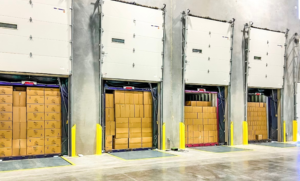


From Factory to Customer: Why Fragmented Supply Chains Are Breaking DTC Brands
Direct-to-consumer brands were built on a promise: fewer middlemen, faster feedback, stronger customer relationships, and more control over the brand experience. But many DTC supply chains have quietly become the opposite. Production lives in one place. Packaging is handled somewhere else. Inventory is split across warehouses. Kitting is improvised. Fulfillment is disconnected from marketing. Returns live in another system. Customer service is left explaining problems it did not create.
That fragmentation is no longer just an operational inconvenience. It is breaking the economics of DTC growth. U.S. ecommerce sales reached $1.2337 trillion in 2025, or 16.4% of total retail sales. More online demand means more orders, more shipments, more returns, and more pressure on every handoff between factory and customer.
The brands that win now are not just the ones with the best ads or the most polished website. They are the ones that can connect manufacturing, packaging, inventory, fulfillment, freight, and returns into a system that actually supports the promise they make to the customer.
The core idea: DTC brands do not lose control all at once. They lose it handoff by handoff. A factory delay becomes a packaging delay. A packaging delay becomes a fulfillment delay. A fulfillment delay becomes a customer complaint. A customer complaint becomes a refund, a bad review, or a lost repeat purchase. Fragmentation turns small operational issues into brand-level damage.
Jump to what matters most
- Why fragmented supply chains are breaking DTC brands
- The hidden cost of too many handoffs
- How fragmentation reaches the customer
- Where margin gets lost
- Why packaging and kitting are the stress test
- Returns expose the weak points
- What a connected factory-to-customer model looks like
- Interactive fragmentation cost calculator
- A practical 30-day action plan
- FAQ
Why fragmented supply chains are breaking DTC brands
DTC brands often start with a simple operating model. A product is made, stored, sold online, and shipped to the customer. In the early stage, that simplicity is real. The founder can see most of the moving pieces. The team can solve exceptions manually. Growth hides the cracks for a while because volume is exciting and the business is still small enough to patch problems with effort.
Then the model gets more complicated. The brand adds more SKUs. It adds bundles, kits, subscription offers, marketplace listings, retail accounts, influencer seeding, seasonal campaigns, and promotional inserts. Inventory gets split. Packaging changes by channel. Some products need prep. Some need kitting. Some need relabeling. Some need a different shipper. Suddenly the DTC promise depends on a chain of vendors, systems, spreadsheets, and exception workflows.
This is where fragmentation begins to break the business. Not because any single partner is bad. Not because the team is careless. It breaks because no one part of the chain owns the total outcome from factory to customer.
What brands think the problem is
“We need cheaper shipping.” “We need faster fulfillment.” “We need better inventory accuracy.” “We need fewer returns.”
Those may all be true, but they are usually symptoms.
What the problem often is
The factory, packaging process, inventory plan, fulfillment operation, carrier strategy, and returns process are not designed as one connected commercial system.
That is the real issue.
Why this matters more now: Pitney Bowes says U.S. parcel volume reached 22.37 billion shipments in 2024. At that scale, brands are competing in a parcel environment where every operational handoff has consequences. A fragmented supply chain has more places for those consequences to multiply.
The old DTC story was about cutting out the middleman. The new DTC reality is that many brands have added the middlemen back in, only now they are hidden behind disconnected workflows.
The hidden cost of too many handoffs
Every handoff in a supply chain creates a moment where information can get lost, inventory can be delayed, packaging can be mishandled, costs can increase, and accountability can become blurry. One handoff is manageable. Five or six uncoordinated handoffs can turn a healthy DTC brand into a constant exception-management machine.
Fragmentation is especially dangerous because the cost rarely appears as one clean invoice. It shows up as expedited freight, late launches, stockouts, excess inventory, temporary labor, repack work, customer service tickets, returns, credits, lower repeat purchase, and missed promotional windows.
| Fragmented handoff | What goes wrong | Business impact |
|---|---|---|
| Factory to packaging | Components arrive late, incomplete, mislabeled, or without clear build instructions | Launch delays, repack work, labor spikes, and quality issues |
| Packaging to warehouse | Finished goods are not packed, labeled, or case-configured for the channel | Prep fees, delayed receiving, fulfillment errors, and retailer compliance risk |
| Warehouse to customer | Pick-pack process is disconnected from campaign logic, bundle logic, or customer promise | Wrong items, missing inserts, slow ship times, and customer dissatisfaction |
| Customer to returns process | Return data is not connected back to packaging, fulfillment, or quality | The brand keeps treating repeat issues as one-off customer events |
The problem is not the existence of partners. Strong supply chains almost always rely on partners. The problem is using partners without a connected operating model. When each partner only sees their piece, no one is optimizing the whole.
- Your marketing calendar changes faster than your supply chain can execute.
- Your team manually tracks critical inventory or bundle components in spreadsheets.
- Your 3PL does fulfillment but does not have a clean path to support kitting or pack changes.
- Packaging decisions are made separately from fulfillment and freight decisions.
- Returns data rarely changes packaging, QC, or supplier decisions.
- Retail, DTC, and marketplace orders require different prep but share one messy inventory pool.
How fragmentation reaches the customer
Customers do not care that a delay was caused by packaging, receiving, inventory sync, carrier pickup, or a component shortage. They experience one thing: the brand did not deliver as expected.
That is why fragmented supply chains are so damaging to DTC brands. DTC is built on trust. The brand owns the relationship directly. When something breaks, the customer does not blame the warehouse, the co-packer, the factory, or the carrier first. They blame the brand.
Delivery promise reality check: Stord’s 2025 mystery shopping report found that only 34% of orders were delivered as promised, with another 12% arriving earlier than expected. That means fewer than half of the observed transactions met or beat the delivery commitment.
Whether or not a brand agrees with every benchmark, the point is clear: delivery promises are hard to keep. Fragmented operations make them harder.
Especially when the customer bought for a specific occasion, launch window, gift, event, or replenishment need.
Every missing insert, wrong item, or incomplete kit becomes a human support cost and a brand perception problem.
A product can be good and still feel cheap, careless, or damaged if the packaging experience fails.
If return reasons are not connected to packaging and fulfillment decisions, the brand repeats the same mistakes.
The customer sees one brand. The supply chain has to behave like one system.
Where margin gets lost
Fragmentation often looks like a customer experience problem first, but it becomes a margin problem quickly. Every disconnected process creates more chances for hidden costs to creep in.
Expedited freight
When production, packaging, or receiving runs late, brands pay to compress time somewhere else.
Manual labor and rework
Disconnected pack instructions, bad labeling, and incomplete component planning create avoidable rework.
Stockouts and missed demand
Inventory may exist in the network but not be available in the right form, channel, or location.
Overstock and stranded inventory
Brands overbuy or overbuild when they do not trust their visibility across the chain.
Returns and replacements
Wrong items, damaged packaging, and unclear kits can turn revenue into reverse logistics.
Customer service load
Support teams spend time explaining problems that better supply chain design could have prevented.
The most frustrating part is that these costs are often misclassified. A packaging failure may show up as a return. A receiving delay may show up as poor fulfillment speed. A kit build issue may show up as customer support cost. A launch delay may show up as poor campaign performance.
The finance version of fragmentation
Fragmentation turns operational friction into scattered expenses. The P&L may show higher freight, higher labor, higher refunds, lower conversion, and weaker repeat purchase. But unless the brand connects those costs back to the underlying handoffs, the team ends up treating symptoms instead of rebuilding the system.
Why packaging and kitting are the stress test
Packaging is where fragmented supply chains reveal themselves fastest. A standard single-SKU order can hide weaknesses for a while. A kit, bundle, display, subscription box, seasonal offer, marketplace multi-pack, or retailer-specific pack cannot.
That is because packaging and kitting require multiple pieces of the business to align. Product availability. Component availability. Labeling. Insert logic. Case configuration. Channel compliance. Quality control. Inventory updates. Final pack-out. Freight. Fulfillment instructions. If any part is disconnected, the customer-facing offer becomes harder to execute.
What fragmented packaging creates
- Late bundle launches
- Missing components
- Manual repack projects
- Incorrect inventory counts
- Inconsistent customer experience
- Higher labor and exception handling
What connected packaging enables
- Faster campaign launches
- Cleaner kitting and assembly
- Channel-ready pack formats
- Better inventory visibility
- More consistent presentation
- Less strain on the fulfillment floor
This is why co-packing, kitting, and fulfillment should not be treated as separate worlds. For DTC brands, they are part of one promise: the customer gets the right product, in the right condition, with the right experience, at the right time.
Operational truth: the more complex the offer, the more connected the supply chain needs to be. Bundles, kits, and multi-packs are not just merchandising tactics. They are tests of whether your operation can execute what marketing sells.
Returns expose the weak points
Returns are one of the clearest places where fragmented supply chains show their true cost. A return is not always just a customer preference issue. It can be the result of unclear product information, weak packaging, wrong item fulfillment, damage, poor sizing, missing components, late delivery, or a customer experience that did not match the promise.
NRF and Happy Returns project that total returns will reach $849.9 billion in 2025, with an estimated 19.3% of online sales returned. For DTC brands, that means reverse logistics is not an edge case. It is part of the operating model.
Fragmented brands often handle returns as a separate function. That is a mistake. Returns are feedback. They tell you where the supply chain promise is breaking.
| Return signal | Possible supply chain issue | What to investigate |
|---|---|---|
| Damaged on arrival | Packaging, pack-out, carrier handling, or shipper mismatch | Packaging specs, dunnage, case pack, transit testing, carrier claims |
| Wrong item or incomplete kit | Pick-pack error, kitting error, inventory sync issue | Scan process, kit build logic, WMS setup, component control |
| Arrived too late | Promise mismatch, fulfillment delay, carrier service choice | Cutoff times, SLA accuracy, fulfillment capacity, shipping method rules |
| Not as expected | Merchandising, packaging presentation, PDP mismatch | Product content, packaging claims, insert messaging, imagery |
Better return management starts upstream: the goal is not only to process returns efficiently. It is to learn why they happened and fix the handoff that created them.
What a connected factory-to-customer model looks like
A connected supply chain does not mean one company has to do everything. It means the operating model is designed around the full customer promise, not around isolated vendor tasks.
In a stronger model, the factory, packaging plan, inventory flow, kitting process, fulfillment operation, carrier strategy, and returns process are connected by shared data, clear ownership, and practical decision rules.
Step 1: Product and packaging are planned together
The team defines how each SKU, kit, bundle, or channel-specific offer should be packed before inventory starts moving.
Step 2: Inventory is visible by usable form
The brand knows what is raw component inventory, what is finished goods, what is kitted, what is channel-ready, and what is unavailable.
Step 3: Kitting and co-packing support the commercial calendar
Launches, bundles, retail requirements, and seasonal campaigns are planned as supply chain events, not last-minute warehouse requests.
Step 4: Fulfillment rules match the customer promise
Shipping methods, cutoff times, packaging instructions, and SLA expectations are aligned with what the site and marketing team communicate.
Step 5: Returns data loops back into operations
Return reasons inform packaging improvements, product content, fulfillment QA, and supplier conversations.
Fragmented model
- Each partner optimizes its own task
- Marketing launches faster than operations can support
- Inventory visibility is partial
- Returns are treated as customer service events
- Packaging changes are reactive
Connected model
- Partners are aligned around customer outcome
- Campaigns are planned with fulfillment and kitting in mind
- Inventory is tracked by location and usable status
- Returns become operational feedback
- Packaging is part of the growth plan
The best DTC operations do not remove complexity. They organize it.
Interactive fragmentation cost calculator
Quick estimator: what fragmentation may be costing you
This is a directional planning tool. It helps show how small operational leaks can become meaningful when spread across DTC order volume.
What to include in the cost per affected order
- Customer service time
- Reshipments or replacements
- Expedited freight
- Manual warehouse labor
- Repack or relabeling work
- Discounts, credits, or refunds
- Lost future purchase value
Why this matters: fragmented supply chains rarely fail every order. They fail a small percentage repeatedly. At DTC volume, that small percentage can become a major profit leak.
Interactive readiness score: how fragmented is your DTC operation?
Check the items that sound true for your business. The guidance will update automatically.
Tip: start checking boxes to see your guidance.
A practical 30-day action plan
You do not need to rebuild the entire supply chain at once. The first goal is to make the hidden handoffs visible, then fix the ones that create the most friction for customers and the most leakage for the business.
Step 1: Map the actual handoffs
Document every step from factory release to customer delivery, including packaging, kitting, warehouse receiving, inventory updates, fulfillment, carrier pickup, and returns.
Step 2: Identify where exceptions happen
Look for rush orders, manual fixes, late launches, rework, missing components, delayed receiving, and customer service spikes.
Step 3: Connect packaging to fulfillment
Make sure kits, bundles, inserts, labels, and channel-specific packs are planned before they hit the warehouse floor.
Step 4: Reclassify returns as feedback
Group returns by operational cause, not just customer reason. Look for signals tied to damage, late delivery, wrong item, unclear bundle, or poor presentation.
Step 5: Define one accountable owner
Someone needs to own the total factory-to-customer outcome across vendors, not just one step of the chain.
Step 6: Build a connected launch checklist
Before every campaign, confirm inventory, pack-out, kitting, labels, fulfillment rules, carrier expectations, and return handling.
30-day implementation checklist
- Map every physical and data handoff from factory to customer.
- List the top 10 recurring exceptions from the last 90 days.
- Calculate the cost of delayed orders, rework, reships, and customer credits.
- Review returns for packaging, fulfillment, and promise-mismatch signals.
- Identify which bundles, kits, or channel-specific packs create the most friction.
- Confirm where inventory visibility breaks down by location or usable status.
- Create a pre-launch operations checklist for every new DTC campaign.
- Assign one owner for the customer-facing supply chain outcome.
- Choose one high-impact handoff to simplify first.
- Measure improvement in order accuracy, ship speed, support tickets, and returns.
The strongest DTC brands do not just market better. They operate cleaner. The factory-to-customer path has to be designed with the same care as the website, product, and brand story.
The clearest takeaway
Fragmented supply chains break DTC brands because they create too many places where the customer promise can fall apart. A brand may have a strong product, good creative, and solid demand, but if factory timing, packaging, inventory, fulfillment, freight, and returns are disconnected, the business will keep leaking margin and trust.
The solution is not simply adding more vendors or chasing the lowest-cost provider at each step. The solution is building a more connected operating model that treats packaging, kitting, fulfillment, and returns as part of one customer-facing system.
From factory to customer, every handoff either protects the brand promise or weakens it.
Bottom line: DTC brands do not scale on demand alone. They scale when the supply chain can deliver the experience that demand creates.
FAQ: fragmented supply chains and DTC brands
What is a fragmented DTC supply chain?
A fragmented DTC supply chain is an operating model where production, packaging, inventory, kitting, fulfillment, shipping, and returns are managed in disconnected steps without shared visibility or clear ownership of the total customer outcome.
Why are fragmented supply chains dangerous for DTC brands?
They create more handoffs where delays, errors, rework, inventory gaps, packaging problems, and customer experience failures can happen. Those issues often show up as higher freight costs, more support tickets, more returns, weaker repeat purchase, and lower margin.
How does supply chain fragmentation affect customer experience?
Customers experience the brand as one promise. If an order is late, damaged, incomplete, or confusing, they usually blame the brand, not the factory, warehouse, co-packer, or carrier. Fragmentation makes those failures more likely.
Why are packaging and kitting important in a connected supply chain?
Packaging and kitting connect the product promise to the fulfillment reality. Bundles, kits, inserts, labels, and channel-specific pack formats require coordination across inventory, packaging, fulfillment, and shipping. If those pieces are disconnected, the offer becomes harder to execute consistently.
What is the first step to fixing a fragmented DTC supply chain?
Start by mapping every handoff from factory to customer. Then identify where exceptions, delays, rework, returns, and customer service issues happen most often. The best first fix is usually the handoff creating the most customer-facing pain or margin leakage.
Do brands need one partner for everything to reduce fragmentation?
Not necessarily. A connected supply chain does not require one provider to do everything. It requires shared visibility, clear ownership, aligned processes, and partners that are coordinated around the total customer experience.
Keep the momentum going
If your team is constantly fixing late launches, inventory confusion, kitting issues, shipping problems, or returns after they happen, the issue is probably not one isolated vendor. It is the structure of the supply chain itself.
Jump back to the calculatorDTC brands need a supply chain that protects the promise from factory to customer.
Growth creates complexity. The brands that scale profitably are the ones that organize that complexity before it reaches the customer. Packaging, kitting, fulfillment, freight, and returns should not operate as disconnected functions. They should work together as one customer-facing system.
Fragmentation breaks trust. Connected execution protects it.