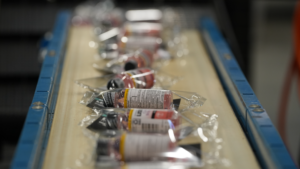


Many sellers picture the real work beginning once their products hit an Amazon fulfillment center. In practice, the make-or-break moments happen much earlier. Before anything ships out to customers, your inventory has to be inspected, labeled, packaged, and prepared to meet Amazon’s exact standards. That behind-the-scenes effort (FBA prep) is what keeps your products moving smoothly once they enter Amazon’s system.
Amazon’s rules might seem strict, but there’s a reason for it. The company handles billions of packages every year, and even small mistakes (an incorrect barcode, a missing polybag, the wrong kind of packaging) can slow everything down. If your shipment doesn’t meet requirements, it can lead to longer check-in times, unexpected fees, chargebacks, or even suppressed listings that stop sales entirely.
This attention to detail matters even more now that Amazon is making a major change to its U.S. operations. Beginning January 1, 2026, Amazon will stop offering its own prep and item-labeling services for FBA sellers. Tasks like barcode labeling, shrink-wrapping, polybagging, and similar services will no longer be available inside Amazon’s fulfillment centers, meaning all inventory must arrive fully compliant before it’s received.
For sellers who relied on Amazon’s optional prep services (especially those without warehouse space or dedicated staff) this shift could require a complete overhaul of how they manage inbound shipments. Because of that, more brands are leaning on experienced 3PL partners who can take on the work, ensure compliance, and keep inventory flowing without interruption.
This guide walks through everything you need to know about Amazon FBA prep: what it includes, why it matters, and how to stay ahead of Amazon’s evolving requirements. Whether you’re new to FBA or rethinking your workflow after the upcoming policy changes, the goal is simple—help you avoid delays, protect your account health, and keep your products moving.
What Exactly Is Amazon FBA Prep?
Amazon FBA prep is the process of getting your inventory ready before it arrives at an Amazon fulfillment center. This includes tasks like product inspection, labeling, polybagging, bubble-wrapping, kitting, bundling, barcoding, and ensuring all packaging meets Amazon’s strict inbound requirements. In short, FBA prep ensures that every unit is compliant, scannable, safe to handle, and ready for Amazon to fulfill without manual intervention.
Why Amazon Requires Prep
Amazon processes billions of packages annually, and its fulfillment workflow depends on absolute accuracy and efficiency. In 2023 alone, Amazon delivered over 4.8 billion packages in the U.S. through its own logistics network. Any inventory that arrives mislabeled, damaged, or improperly prepared slows this system down.
To maintain speed at scale, Amazon requires that all inbound inventory:
- Is labeled correctly (FNSKU-specific)
- Meets strict packaging standards
- Includes correct box content information
- Is safe for warehouse associates to handle
Sellers who fail to meet these requirements can face unplanned prep fees, delays of several days to several weeks, chargebacks, or even inbound inventory refusals. And because Amazon’s algorithms favor fast-moving, highly reliable listings, prep issues can ultimately impact search ranking, Buy Box eligibility, and account health.
How Proper Prep Impacts Customer Experience
Prep isn’t just about compliance–it’s about customer satisfaction. Amazon’s data shows that products with inadequate packaging or prep drive significantly higher return rates, especially in fragile and consumable categories. Something as simple as a missing suffocation label or loose item inside a polybag can result in damaged goods, negative reviews, and reduced seller performance metrics.
Consistent, accurate prep ensures:
- Fewer damaged or defective items
- Faster check-in times at fulfillment centers
- Higher listing reliability and better customer reviews
- Improved delivery promises and Buy Box performance
Why More Sellers Are Outsourcing FBA Prep
As brands scale, FBA prep becomes one of the biggest operational bottlenecks. Jungle Scout’s 2024 State of the Seller Report found that over 50% of Amazon sellers say the operational side of the business—including inventory and prep—is one of their top challenges.
The complexity grows with:
- Expanded SKU counts
- Seasonal or promotional surges
- Multi-unit bundles and value packs
- Specialized packaging (e.g., liquids, fragile, hazmat)
- Limited in-house staff or warehouse space
Because of this, many sellers turn to specialized 3PLs to handle FBA prep accurately and at scale—especially now that Amazon is discontinuing in-house prep and labeling services in January 2026 in the U.S. (forcing all sellers to fully prep items before arrival). This shift makes outsourcing FBA Prep more valuable than ever for growing brands.
The Core Components of FBA Prep
Amazon FBA prep covers a wide range of tasks, but they all serve the same purpose: making sure every unit arrives ready for Amazon to receive, scan, store, and ship without any surprises. Below are the major components of prep and why each one matters.
1. Product Inspection
- Basic quality control
- Screening for cosmetic or functional defects
- Verifying that each unit matches the seller’s shipment plan
- Confirming that the correct SKU, variation, and quantity were supplied
It’s tempting to skip this step—especially when inventory arrives in sealed master cartons—but even well-established manufacturers make mistakes. A cracked cosmetic jar, a misprinted label, or a color mismatch can all become costly surprises once the inventory hits an Amazon fulfillment center.
Amazon notes that problems caught during inbound receiving—like mislabeled SKUs or defective items—can slow check-in times and affect account metrics [Amazon Inbound Performance]. And once inventory is stuck in receiving limbo, there’s little a seller can do besides wait.
Examples:
- A “Blue, Medium” apparel SKU arrives with several “Large” units mixed in.
- A shipment of water bottles includes 3% with scratched paint or dented lids.
- A home goods set arrives missing one component in multiple units.
Image Reference:
Amazon’s official inspection and prep guidelines — includes photos and diagrams.
Note: You must have an active Amazon Seller Central account to view the images on this page.
Best Practices:
- Implement a sampling procedure: inspect at least 10% of each SKU batch.
- Use a standardized checklist for dimensions, color, SKU match, and damage.
- Photograph any defects immediately to support vendor claims.
- Do not rely solely on factory QC; Amazon will still hold the seller responsible.
2. Labeling & Barcoding (FNSKU Requirements)
Every unit sold through FBA needs an FNSKU label—Amazon’s unique identifier that links the item directly to the seller’s account. This is different from a UPC, which can be shared across multiple sellers. Using the wrong barcode type can lead to major inventory commingling issues.
Key Rules:
Labels must be:
- Fully scannable
- Placed on a flat, unobstructed surface
- Not covering expiration dates, lot numbers, or warnings
If Amazon can’t scan the label—or if it’s placed on a curved surface causing distortion—the fulfillment center will re-label the unit. Every re-label comes with an unplanned prep fee, which may seem small per unit but can quickly compound for big shipments.
Examples:
- Barcodes placed over shrink-wrap seams become unreadable.
- Labels applied to soft packaging wrinkle, causing scan failures.
- In one real scenario, misapplied barcodes caused Amazon to mark a shipment “unreconciled,” delaying receiving by 21 days.
Labeling & Barcoding (FNSKU Requirements):
Amazon’s “Apply Labels” documentation — includes barcode placement examples.
Note: Images and diagrams are only visible to logged-in Amazon Seller Central users.
Best Practices:
- Use thermal printers (e.g., Zebra, Rollo) for crisp labels that don’t smear.
- Avoid placing labels on rounded bottles or flexible bags—use a flat insert area.
- Keep 0.25” of white space around the barcode for cleaner scans.
- Store labels in a climate-controlled area; heat and humidity degrade adhesives.
3. Polybagging, Shrink-Wrapping & Protective Packaging
Certain products require extra protective packaging to ensure they remain intact throughout receiving, sorting, and shipping. Amazon’s prep matrix outlines rules for each product category (whether it’s textiles, liquids, toys with loose parts, or fragile items).
For polybagged products, Amazon requires a suffocation warning on any bag with an opening of 5 inches or larger. This is common for apparel, plush toys, and bundled items.
Examples:
- A plush toy without a polybag sheds fibers onto conveyor belts.
- A boxed kitchen tool with loose accessories needs shrink-wrap to keep pieces contained.
- A fragile ceramic mug must be bubble-wrapped and double-boxed to meet drop-test requirements.
Polybagging & Suffocation Warning Requirements:
Official polybag requirements including size, thickness, and safety warnings.
Note: You must be logged into Amazon Seller Central to see visual examples.
Best Practices:
- Use 2 mil polybags or stronger for durability.
- Print suffocation warnings directly onto bags–stickers rub off.
- For fragile items, perform an unofficial drop test from six feet (Amazon’s standard).
- Add corner protectors or double-boxing for glass, ceramics, and high-risk goods.
- For apparel, don’t overstuff bags–tight bags rip during intake.
Protective packaging doesn’t just reduce damages–it also lowers return rates. Amazon’s internal packaging data indicates that fragile items with inadequate prep see significantly higher return and replacement rates.
4. Bundling & Kitting
Bundling combines multiple products into a single sellable unit. This is common for gift sets, seasonal packs, or multi-component products. However, bundles must be packaged so that associates and customers know the items are meant to stay together.
Amazon requires bundles to be clearly labeled with “Sold as a set–Do not separate.” Without this, warehouse staff may mistakenly break bundles apart during stowing.
Examples:
- A beauty set with three skincare items shrink-wrapped into one unit.
- A “2-pack” of water bottles polybagged with a single FNSKU label.
- A children’s craft kit containing 20 small accessories packed in a master polybag.
Bundle / “Sold as a Set — Do Not Separate” Examples:
Amazon’s guidance on bundling and kitting — includes label examples.
Note: Access to images requires an Amazon Seller Central account.
Best Practices:
- Ensure all components are secured together—shifting pieces trigger damage claims.
- Place the FNSKU label on the outermost packaging only.
- Make sure customers can see what’s inside or include a contents label.
- Avoid using tape-only bundles; tape loosens during transit.
- Use shrink-wrap for multi-piece items to create a single, sturdy unit.
Proper bundling dramatically reduces return rates because customers receive exactly what they expect—and incomplete sets are one of the top return drivers in certain categories.
5. Amazon Box Content & Shipment Prep
Once individual units are prepped, the final step is preparing cartons and pallets for Amazon. This often determines how fast your shipment is received and made available for sale.
Key Components:
Box Content Information. Amazon requires sellers to specify exactly what’s inside each carton. Missing or inaccurate data may trigger delays, manual processing, or extra fees.
Carton Requirements:
- Maximum weight: 50 lbs, unless the item inside weighs more than that
- Cartons must meet durability standards
- No bulging or unevenly packed boxes
Pallet Requirements:
- Standard 40” x 48” pallets
- Proper stretch-wrapping
- Pallets must be evenly stacked
- Labels must be placed on all sides
Partnered vs Non-Partnered Carriers:
Amazon’s partnered carriers (UPS, FedEx, regional LTL) often offer predictable rates and automatic tracking integration. Non-partnered carriers sometimes make sense for oversized freight, palletized shipments, or regional distribution, but they require extra coordination.
Examples:
- A multi-carton shipment without box content info gets routed for manual receiving, delaying check-in.
- A pallet exceeding height requirements is refused at the dock.
- A carton over 50 lbs without a special overweight label violates Amazon safety rules.
Box Content, Carton Standards, and Pallet Prep:
Amazon’s packaging and prep standards for cartons, pallets, and labeling.
Note: You must be logged into Seller Central to view the diagrams and packaging visuals.
Best Practices:
- Always H-tape carton seams for durability.
- Use boxes sized correctly for the product—void fill should not exceed 2–3 inches.
- Apply pallet labels to all four sides for faster receiving.
- Avoid mixing multiple SKUs in a single carton whenever possible.
- Perform weight checks to ensure compliance with Amazon’s lifting safety rules.
Amazon’s FBA Prep Requirements (With Examples)
Amazon’s prep standards can feel complicated, but each rule exists for a reason: to keep products safe, prevent delays, and maintain the customer experience Amazon is known for. Once you understand how these rules apply to different product types, compliance becomes much easier–and far cheaper than dealing with unplanned prep fees, delayed check-ins, or suppressed listings.
Below, we break down the major product categories where Amazon enforces specific prep requirements, along with examples, image references, and practical tips for avoiding common pitfalls.
Apparel
Apparel may seem low-risk compared to electronics or liquids, but it’s one of the categories most frequently flagged for incorrect prep. Clothing can easily pick up dust, moisture, or warehouse residue, so Amazon requires most apparel to be individually polybagged.
Key Requirements:
- Units must be sealed in a clear polybag
- If the bag opening measures 5 inches or more, a suffocation warning is mandatory
- Barcodes must be visible and scannable through the bag
- Apparel should be folded neatly to prevent creasing or misshaping
Amazon Polybag Requirements:
Note: You must be logged into Seller Central to view the polybag requirements.
Example:
A cotton t-shirt shipped without a polybag could arrive wrinkled or stained from warehouse conveyor equipment. Amazon associates may refuse the item entirely, triggering delays or unplanned prep fees.
Image Reference:
Amazon provides visual examples of proper polybagging and suffocation warnings in its official prep guide:
Note: You must have an active Amazon Seller Central account to view the images on this page.
Best Practices:
- Use 1.5–2 mil thickness bags for durability
- Pre-print suffocation warnings directly on bags—stickers fall off easily
- Avoid overstuffing polybags; overfilled bags often rip during handling
- Place the FNSKU facing outward to speed up inbound scanning
Liquids
Liquids are one of the most sensitive product categories Amazon handles. A single leaking item can damage an entire shipment (or pose safety issues), so Amazon uses strict leak-prevention criteria.
Key Requirements:
Products must:
- Pass Amazon’s 6-foot drop test
- Be fully sealed (tape-sealed caps, shrink bands, or induction seals)
- Be enclosed in a polybag if there’s any chance of leakage
- Be wrapped or overboxed if they’re fragile
Amazon provides detailed guidance for prepping liquids, creams, gels, fragile containers, and leak-prone items in its official prep documentation:
Note: You must be logged into Amazon Seller Central to view the images, diagrams, and examples on this page.
Example:
A bottle of lotion without a heat-sealed cap may pass a casual inspection but still burst open after temperature changes during transport. Amazon will either repackage it at your expense or refuse the shipment.
Image Reference:
Liquid prep examples, including shrink bands:
Amazon’s official liquid-prep guidelines include visual examples of compliant shrink bands, heat seals, polybagging, overboxing, and leak-prevention methods for liquids, gels, and creams.
Note: You must have an active Amazon Seller Central account to view the images and diagrams.
Best Practices:
- Apply shrink bands on all cosmetic or personal care items
- Use double polybags for lotions, gels, and oils
- For glass containers, add bumper wrapping around corners
- Label the outside packaging with “Fragile” if appropriate
Oversized Products
Oversized or heavy items need special treatment in Amazon’s network to prevent injury and ensure safe storage. Incorrect prep for these items can lead to significant delays and expensive rework.
Key Requirements:
- Units over 50 lbs must display a “Team Lift” label
- Units over 100 lbs require a “Mechanical Lift” label
- Packaging must support the unit’s weight and shape
- Sharp edges must be padded and covered
Amazon Heavy & Bulky Guidance:
Note: You must have an active Amazon Seller Central account to view the reference materials.
Example:
A 65 lb dumbbell set shipped in thin corrugate without corner support may burst through the box during sorting. Amazon will halt the receiving process and mark the entire shipment as non-compliant.
Image Reference:
Amazon’s Heavy & Bulky (oversized) item prep guidance includes visual examples of “Team Lift” labels, “Mechanical Lift” labels, reinforced packaging requirements, and proper handling instructions for items over 50–100 lbs.
Note: You must be logged into Amazon Seller Central to view the images, diagrams, and label examples.
Best Practices:
- Reinforce all seams with H-tape (three strips per flap)
- Add foam or honeycomb corner protectors
- Choose double-wall or triple-wall corrugate for heavy items
- Clearly label heavy-side orientation (“This Side Up”)
Expiration-Dated Products
Products with a shelf life (such as supplements, snacks, OTC healthcare items, and cosmetics) must be clearly labeled and compliant with Amazon’s expiration and safety standards.
Key Requirements:
- Expiration date must appear on both the product and the outer packaging
- Date must follow MM-DD-YYYY or MM-YYYY
- Products must have sufficient remaining shelf life before arriving at FBA (often 90–120 days minimum)
- Lot numbers must not be obscured
Amazon Expiration Date Rules:
Note: You must have an active Amazon Seller Central account to view the reference materials.
Example:
A bottle of vitamins with only 45 days of remaining shelf life may be automatically disposed of or returned to you—at your cost. Amazon will not store or ship products close to expiration.
Image Reference:
Amazon’s expiration-date requirements page includes examples of correct date formatting, where expiration dates must appear on packaging, and how shelf-life rules apply to consumables, supplements, and topical products.
Note: You must be logged into Amazon Seller Central to view the images, diagrams, and guidance examples on this page.
Best Practices:
- Print expiration dates directly onto labels—not on easily removable stickers
- Avoid shipping products during extreme temperature seasons unless packaging is insulated
- Double-check that expiration information is not covered by FNSKU labels
- Rotate inventory with FIFO (first in, first out) to avoid waste
Hazmat (Dangerous Goods) Basics
Hazmat products (also called Dangerous Goods or DG) include anything flammable, corrosive, pressurized, or reactive–plus certain battery-powered items. These products go through an extra approval process before being accepted at FBA.
Key Requirements:
- Submit a Safety Data Sheet (SDS) or battery documentation
- Receive Hazmat classification approval before shipping
- Use packaging that meets DOT and IATA standards
- Properly label lithium batteries and aerosols
Amazon’s Dangerous Goods (Hazmat) Program page provides visual examples of compliant packaging, labeling (including lithium battery and flammable goods labels), required documentation, and storage/transport rules for regulated products.
Note: You must be logged into Amazon Seller Central to view the images, diagrams, and packaging examples included on this page.
Example:
A simple spray bottle of glass cleaner may qualify as hazmat. If Amazon doesn’t have documentation on file, it may be automatically blocked from inbound shipment creation until you submit compliance documents.
Image Reference:
Amazon’s Dangerous Goods (Hazmat) Program documentation includes images and examples of required labeling for lithium batteries, flammable products, aerosols, and other regulated materials, along with packaging and compliance guidelines.
Note: You must have an active Amazon Seller Central account to view the images, diagrams, and label examples on this page.
Best Practices:
- Keep SDS documents updated annually
- Do not ship hazmat items mixed with non-hazmat items in the same carton
- Train staff on DOT packaging rules if fulfilling in-house
- Confirm whether your ASIN requires hazmat review before launching it (common oversight)
Putting It All Together
Amazon’s prep requirements may vary by category, but the underlying goal is always the same: avoid damage, protect customers, and keep inbound operations running smoothly. When inventory arrives properly prepped, Amazon can receive it faster, store it correctly, and ship it accurately–helping sellers maintain Buy Box performance, avoid returns, and protect account health.
But these rules are only becoming more important. With Amazon planning to discontinue its U.S. prep and labeling services in January 2026, every unit must arrive fully compliant or risk delays, fees, or outright rejection.
For brands who want to protect margins and streamline operations, partnering with a 3PL that specializes in Amazon prep can be a major advantage (especially one with experience in apparel, liquids, bundles, regulated goods, and more).
The Costs of FBA Prep: What Sellers Should Expect
For many sellers, the biggest surprise about FBA prep isn’t the work involved–it’s the cost of getting it wrong. Between Amazon’s own prep fees, the cost of materials, labor, and the risk of unplanned charges, prep can become a meaningful line item in your operating budget. Understanding the true cost structure helps sellers make better decisions about whether to prep in-house or outsource.
Amazon’s Per-Unit Prep Fees
Amazon offers certain prep services for a fee, but these services are being phased out in the U.S. by January 1, 2026, which raises the stakes even further. Until then, Amazon’s standard per-unit prep fees look like this:
- Labeling: ~$0.55 per unit
- Polybagging: ~$1.00 per unit
- Bubble-wrap: ~$1.00 per unit
- Taping: ~$0.60 per unit
- Opaque bagging: ~$1.00 per unit
Source: (Seller Central – login required) https://sellercentral.amazon.com/help/hub/reference/G200200350
While these fees don’t seem alarming on paper, they add up quickly. A shipment of 1,500 units needing labeling and polybagging could exceed $2,000 in prep fees.
And because Amazon is discontinuing these services, sellers will soon need a replacement solution—either in-house labor or a 3PL.
Typical 3PL Prep Pricing Ranges
Third-party logistics providers (3PLs) that specialize in Amazon FBA prep usually charge per unit, but pricing varies depending on complexity, volume, and turnaround time. Typical ranges include:
- Standard unit prep (labeling, bagging): $0.75–$2.00 per unit
- Kitting & bundling: $1.50–$4.00+ per bundle
- Fragile item prep (bubble wrap, foam, overboxing): $1.25–$3.50 per unit
- Oversized items: $2.00–$6.00 per unit
- Storage: $0.50–$25 per pallet per month, depending on region
These prices often beat Amazon’s per-unit fees—especially for larger volumes—and include hands-on quality checks Amazon doesn’t provide.
How Improper Prep Leads to Unplanned Fees
A lot of sellers first look into outsourcing only after getting hit with unexpected charges. These can pile up fast, and often without warning.
Here are a few of the most common unplanned fees caused by incorrect prep:
- Unplanned Prep Fees: Amazon charges extra when units require labeling, bagging, or additional prep after arriving at the fulfillment center.
- Manual Processing Fees: Missing box content information or poorly packed cartons may trigger manual receiving, which slows inventory check-in.
- Inbound Defect Charges: Mislabeled SKUs or damaged units can trigger rework charges or even disposal.
- Inventory Delays Lead to Lost Sales: This is the silent cost–inventory stuck in receiving means missed revenue.
In Jungle Scout’s 2024 State of the Seller Report, 57% of Amazon sellers said inventory and fulfillment challenges were among the biggest threats to profitability. Prep errors contribute heavily to those challenges.
Another often-overlooked cost: Amazon’s receiving delays. Even a few days of lost selling time during Q4 can cost thousands in lost revenue—far more than the cost of proper prep.
How Outsourcing Reduces Total Prep Costs
When prep moves from DIY to a 3PL, it’s not just about time savings—it’s about cost control and predictability. Outsourcing helps sellers:
- Avoid unplanned Amazon fees (labeling, polybagging, bubble-wrap charges)
- Reduce receiving delays, which protects Buy Box eligibility and sales velocity
- Improve accuracy, lowering the risk of returns and negative reviews
- Create predictable, scalable labor costs, rather than scrambling during peak season
Because 3PLs work with thousands of FBA units per day, they’re often more efficient (and more accurate) than in-house staff juggling multiple tasks.
And with Amazon discontinuing prep services in 2026, outsourcing isn’t just a cost-saving option; it’s becoming a necessity for many brands.
In-House FBA Prep vs. Outsourcing to a 3PL
Once a seller understands what goes into FBA prep, the next question becomes obvious: Should we handle all of this ourselves, or bring in a 3PL? There isn’t a one-size-fits-all answer. The right choice depends on your SKU complexity, order volume, staffing capacity, and long-term goals.
Below is a practical look at when in-house prep makes sense, when outsourcing becomes the smarter (and more cost-effective) move, and how to evaluate the best path as you scale.
When Sellers Should Handle Prep Themselves
Managing FBA prep internally can work well–sometimes. For smaller sellers with simple product lines, it’s often the most cost-efficient and straightforward option. Here are the situations where in-house prep tends to be the right fit:
Ideal for Low SKU Counts
If you’re selling:
- Fewer than 10–20 SKUs,
- Working with a single supplier,
- And your products require minimal or no special prep…
…then keeping prep internal is usually manageable.
Example: A private-label brand selling two variations of a yoga mat may only need basic FNSKU labeling and carton prep. With predictable inventory cycles, this can be done in a garage, small office, or co-working space with minimal equipment.
Simple Packaging Requirements
Products that don’t require:
- Kitting
- Bubble wrap
- Polybags
- Fragile handling
- Expiration tracking
…are easier to prep internally.
If your product is already packaged well by the manufacturer and simply needs an FNSKU applied, in-house prep is usually the cheapest solution.
Local Labor Availability
If you already have part-time help, warehouse staff, or seasonal workers, in-house prep can be economical–especially when volume is low.
When Speed Isn’t Critical
If you’re not racing toward Prime Day or Q4 deadlines, doing prep yourself may feel less risky. However, this changes quickly as sales grow.
What Sellers Should Watch Out For
Even brands that start with in-house prep eventually hit challenges:
- Space limitations
- Inconsistent labor availability
- Errors during busy seasons
- Slower turnaround times
- Higher return rates from packaging mistakes
The same 2024 Jungle Scout survey found that inventory and fulfillment challenges increased significantly once sellers exceeded 100–200 units shipped per month–a tipping point where in-house prep becomes more burdensome than beneficial.
When It Makes Sense to Outsource
Outsourcing to a 3PL is becoming increasingly common–especially now that Amazon is ending its in-house prep services in 2026. For many sellers, the operational savings and improved accuracy alone justify the move.
Here’s when outsourcing is not only helpful, but usually necessary:
High SKU Counts
Once a seller exceeds 20–50 SKUs, prep becomes more complex. Labeling mistakes, counting errors, and mixed inventory issues multiply quickly.
Example: A beauty brand with 37 SKUs, each requiring batch tracking and expiration date verification, saw its internal prep time jump from 8 hours per week to 40+. Outsourcing returned that time to product development and marketing–where the ROI is far higher.
Seasonal Spikes & Peak Season Volumes
If your business experiences holiday surges, Q4 spikes, Prime Day waves, or promotional pushes, in-house teams often struggle to keep up. 3PLs, by contrast, are built for volume swings.
Amazon reported that during Q4 2023, inbound shipment volume increased by more than 30% compared to the rest of the year–a load that overwhelms small internal teams.
Complex Kitting & Bundling
Kitting requires:
- Precise component counts
- Custom labeling
- Secure packaging
- Strict QC
Small mistakes are expensive. Missing pieces lead to returns, negative reviews, and suppressed listings.
Example: A toy brand selling craft kits found that incomplete kits led to a 14% return rate. After outsourcing kitting to a specialist 3PL, returns fell below 2%.
Compliance-Heavy Categories
Products that require:
- Hazmat documentation
- Expiration tracking
- Temperature-sensitive storage
- Fragile item protection
- DOT-compliant overboxing
…are better handled by teams trained in Amazon compliance.
You Need Faster Turnaround & Stability
Late shipments lead to:
- Inventory stockouts
- Lost Buy Box opportunities
- Lower sales velocity
- Lowered Amazon ranking
3PLs built for FBA keep turnaround times consistent—even during peak season.
When Cost Savings Are Part of the Strategy
Outsourcing can lower total costs by:
- Eliminating unplanned Amazon prep fees
- Reducing returns from packaging issues
- Avoiding warehouse leases
- Eliminating the need to hire or manage hourly labor
- Reducing shipping costs via better location logistics (e.g., Midwest distribution)
Many sellers find that outsourcing gives them predictable cost per unit, versus fluctuating labor and material costs internally.
In-House vs. Outsourced FBA Prep: Comparison Table
| Factor | In-House Prep | Outsourced Prep (3PL) |
|---|---|---|
|
Cost Structure
|
Lower cost at low volume; spikes during busy seasons
|
Predictable per-unit pricing; more efficient at scale
|
|
Accuracy |
Depends on staff training; higher error risk
|
High accuracy; Amazon compliance expertise
|
|
Speed & Turnaround
|
Slows down with volume or staffing shortages
|
Fast, consistent turnaround, even during Q4
|
|
Scalability |
Limited by space and labor
|
Scales instantly with demand
|
|
Space Requirements
|
Requires storage, prep area, materials
|
No additional space required
|
|
Training & Compliance
|
Seller must track all Amazon rule changes
|
3PL stays up-to-date on Amazon requirements
|
|
Kitting & Bundling |
Time-consuming and error-prone
|
Highly optimized and quality-controlled
|
|
Risk of Unplanned Fees |
Higher |
Significantly lower
|
|
Operational Focus
|
Pulls time away from marketing, sourcing, growth
|
Seller stays focused on revenue-generating activities
|
How to Choose the Right FBA Prep Partner
Choosing the right FBA prep partner is one of the most important operational decisions an Amazon seller can make. A strong partner doesn’t just bag and label products–they help prevent delays, protect your seller rating, and keep your inventory moving smoothly through Amazon’s increasingly strict inbound process. A weak partner, on the other hand, can cause the very problems prep is meant to prevent.
Here’s what to look for when evaluating a 3PL or prep center, along with practical examples of how each capability matters in day-to-day operations.
Experience With Amazon Compliance
Amazon’s prep rules evolve frequently. A good partner should stay ahead of changes (especially with Amazon’s plan to phase out its in-house prep and labeling services in January 2026, which shifts even more responsibility onto sellers and their 3PLs).
What to look for:
- Demonstrated understanding of FNSKU requirements
- Familiarity with expiration-dated and hazmat rules
- Knowledge of Amazon’s box content, carton, and pallet standards
- A track record of low rejection rates at Amazon FCs
Example: A supplement brand working with a prep partner who didn’t understand expiration-date visibility rules resulted in 1,300 units being marked “unsellable.” A compliant prep partner would have caught the issue before the shipment left the warehouse.
Best Practice: Ask potential 3PLs for their Amazon inbound defect rate or the percentage of shipments flagged for non-compliance. Experienced prep partners track this internally.
Kitting, Bundling & Shrink-Wrapping Capacity
Not every prep center is built for value-added services, but many sellers rely heavily on kitting (such as in categories like beauty, toys, consumer goods, supplements, and holiday bundles).
What to look for:
- Ability to assemble multi-unit or multi-SKU bundles
- Shrink-wrapping equipment and staff trained in secure sealing
- “Sold as a set” label compliance
- QC checks to ensure components aren’t missing
Example: A toy brand offering a 25-piece craft kit needs more than simple labeling. Each unit must be:
- Verified for component count
- Secured in a polybag or shrink wrap
- Labeled as a single sellable set
If even one piece is missing, returns spike. And returns matter–a 2023 returns report found that wrong, missing, or defective parts account for over 15% of Amazon returns in craft, hobby, and toy categories.
Best Practice: Ask the 3PL how they verify component counts. Prep centers that perform dual QC checks (two checkpoints, two team members) usually have the lowest error rates.
Fast Turnaround Times (Same-Day / Next-Day When Needed)
Inventory delays are expensive. A product stuck in receiving for a week is not generating sales. And during peak season, even a short delay can cost thousands.
What to look for: In Amazon’s 2023 logistics update, they reported a 30%+ surge in inbound volume during Q4, which means slow prep partners create bottlenecks when sellers need uptime most.
- Standard turnaround under 48 hours
- The ability to accelerate to same-day for urgent items
- Dedicated receiving teams
- Weekend or extended-hour capacity during peak
Example: A seller preparing for Prime Day might need inventory turned around the same day to avoid missing the promotion window. Partners without surge capacity often become a bottleneck.
Best Practice: Have your 3PL share their SLA (service-level agreement) in writing. If they cannot commit to turnaround times, expect delays–especially during holidays.
Integrations: Shopify, Amazon Seller Central, and WMS Platforms
Smooth digital integration reduces mistakes, improves speed, and helps sellers maintain accurate inventory data across platforms.
What to look for:
- Integration with Seller Central for shipment creation
- Ability to pull orders or inventory from Shopify, BigCommerce, or WooCommerce
- Compatible WMS platforms (e.g., Extensiv, ShipStation, Logiwa)
- Automated box content uploads
- Real-time inventory visibility
Example: A brand using Shopify and Amazon might rely on their prep partner not only for prep but for cross-channel inventory tracking. Without integration, sellers often double-count or miscount inventory–leading to stockouts, which are one of the top causes of lost Buy Box share according to Amazon’s retail readiness guidelines.
Best Practice: Ask the 3PL to walk you through their workflow for creating inbound shipments in Seller Central. Partners who rely entirely on manual processes are more prone to mistakes.
Transparent Pricing and Quality Control
Prep pricing varies widely, and sellers should be wary of partners who advertise low per-unit costs but hide charges in storage, labeling fees, long-term holding, or add-on services. Clarity is essential.
What to look for:
- Per-unit pricing listed publicly or provided clearly upfront
- Straightforward bundling/kitting rates
- QC check processes that catch errors before items ship
- No surprise onboarding or “intake” fees
- No long-term storage penalties disguised as “slow-mover fees”
Example:One common problem sellers encounter is “surprise” storage fees after inventory sits for more than 30 days. A transparent partner will clearly communicate holding fees, pallet costs, and billing cycles in advance.
Best Practice: Ask the 3PL for a line-item example invoice. This reveals how they charge for:
- Polybags
- Bubble wrap
- Labeling
- Storage
- Carton fees
- Palletization
- Workforce surcharges
If they hesitate to show it, consider that a red flag.
Common FBA Prep Mistakes Sellers Make
Most FBA issues don’t come from complicated edge cases. They come from a handful of repeat mistakes that Amazon flags every day. The frustrating part? Nearly all of them are preventable. Below are the most common FBA prep errors sellers run into, why they matter, and how to avoid them.
Mislabeling (or Incorrect Barcode Use)
Mislabeling is one of the fastest ways to create inbound chaos. Every FBA unit must be labeled correctly with an FNSKU that ties the product to the correct seller account. Problems arise when:
- UPCs are left exposed instead of being covered
- Labels are placed on curved or uneven surfaces
- Barcodes are wrinkled, smudged, or covered by tape
- The wrong FNSKU is applied to a SKU or variation
When Amazon can’t scan a label, it applies its own (and charges an unplanned prep fee). Worse, incorrect labels can cause inventory to be commingled or stranded.
Amazon explicitly notes that barcode issues are a leading cause of inbound receiving delays and inventory reconciliation problems
Source: Amazon Seller Central – Labeling Requirements, login required: https://sellercentral.amazon.com/help/hub/reference/G201033220
Example: A seller sends in two color variations of the same product but uses the same label for both. Amazon receives them as one SKU, and half the inventory becomes unsellable.
Best Practices:
- Always cover or remove UPCs when using FNSKUs
- Place labels on flat, easily scannable surfaces
- Use thermal printers (not inkjet) for durable labels
- Spot-check barcodes before shipping
Overfilled or Improperly Packed Cartons
Amazon has strict carton rules, but many sellers treat them as suggestions. Overfilled boxes, bulging sides, or overweight cartons frequently cause:
- Receiving slowdowns
- Carton damage
- Safety violations
- Rejected shipments
Amazon’s standard carton weight limit is 50 lbs, unless the individual unit itself weighs more than that
Source: Amazon Packaging Requirements, login required: https://sellercentral.amazon.com/help/hub/reference/G200140500
Example: A seller packs 62 lbs into a standard carton to “save on shipping.” Amazon flags the shipment, routes it for manual handling, and delays receiving by over a week.
Best Practices:
- Weigh every carton before shipping
- Use appropriately sized boxes—avoid “cramming”
- Reinforce seams with proper H-taping
- Don’t mix multiple SKUs in a single carton unless required
Missing or Incorrect Expiration Dates
Expiration-dated products–like food, supplements, cosmetics, and topical items–are heavily regulated. Amazon requires:
- Expiration dates on both the product and outer packaging
- Approved date formats (MM-DD-YYYY or MM-YYYY)
- Adequate remaining shelf life upon arrival
If expiration dates are missing, obscured, or formatted incorrectly, Amazon may mark inventory as unsellable or dispose of it entirely
Source: Amazon Expiration-Dated Inventory Requirements, login required:
https://sellercentral.amazon.com/help/hub/reference/G201927970
This matters to customers, too. A Morning Consult study found that nearly 70% of consumers lose trust in a brand after receiving expired or near-expiration products.
Example: A vitamin bottle has an expiration date on the label, but the outer polybag covers it. Amazon flags every unit as non-compliant.
Best Practices:
- Ensure expiration dates are visible without opening packaging
- Never place FNSKU labels over expiration or lot numbers
- Verify remaining shelf life before shipping to FBA
- Use permanent printing instead of removable stickers
Failing Hazmat (Dangerous Goods) Requirements
Hazmat issues often catch sellers off guard—especially because products that don’t seem dangerous can still be classified as hazmat. Common examples include:
- Aerosols
- Cleaning solutions
- Lithium battery products
- Pressurized or flammable items
Amazon requires proper Dangerous Goods classification, documentation (such as SDS), and compliant packaging before these products are allowed into FBA.
Source: Amazon Dangerous Goods Program, login required:
https://sellercentral.amazon.com/help/hub/reference/G201817070
Example: A household cleaner launches without hazmat approval. Amazon blocks inbound shipments entirely until documentation is submitted and reviewed, sometimes taking weeks.
Best Practices:
- Check hazmat status before launching a new ASIN
- Keep SDS documentation updated annually
- Ship hazmat and non-hazmat items separately when possible
- Work with prep teams familiar with DG packaging rules
Missing or Inaccurate Box Content Information
Box content information tells Amazon exactly what’s inside each carton. When this data is missing or incorrect, Amazon may:
- Route shipments for manual processing
- Delay receiving during peak season
- Charge additional fees
According to Amazon, shipments without accurate box content data are significantly more likely to experience receiving delays, especially during Q4
Source: Amazon Box Content Requirements, login required: https://sellercentral.amazon.com/help/hub/reference/G200141500
Example: A shipment arrives with 40 cartons, but no box content info was uploaded. Amazon manually opens cartons to verify contents, delaying availability by 10+ days.
Best Practices:
- Upload box content info for every shipment
- Avoid mixing SKUs in cartons when possible
- Use system integrations or WMS tools to reduce errors
- Double-check carton counts before confirming shipments
Why These Mistakes Matter
Individually, these errors may seem minor. Collectively, they account for a large share of:
- Unplanned prep fees
- Receiving delays
- Inventory being marked unsellable
- Lost sales during critical windows
Avoiding these common pitfalls (either through better internal processes or by working with an experienced FBA prep partner) can dramatically reduce costs and stress as your business grows.
A Step-by-Step Walkthrough of the FBA Prep Process
If you’re new to FBA (or tightening up your process ahead of a busy season), it helps to think of prep as a simple pipeline: receive > inspect > prep > QC > pack > build shipment > ship to Amazon. The details matter, but the flow stays the same.
Below is a practical, step-by-step walkthrough you can follow for most products.
1. Receiving inventory
Goal: Confirm you received what you think you received—before you start labeling anything.
Step-by-step:
- Stage your receiving area (clean surface, enough room to open master cartons without mixing SKUs).
- Match the delivery paperwork to your PO (or supplier invoice): SKU names, quantities, case packs.
- Count by “units,” not just cartons. Carton counts hide errors (e.g., supplier packed 22 units in a “24-pack”).
- Separate by SKU/variation immediately (color/size/pack count). Use temporary “staging labels” so nothing drifts.
- Quarantine anything questionable (damaged, wrong variation, missing components) in a clearly marked area.
Example: You ordered 600 units (6 master cartons × 100). Two cartons contain mixed variations. If you catch it at receiving, you can fix it in minutes. If you catch it after labeling, you’ve created hours of rework.
Resources: Helpful resource (shipment creation overview) – Explains the “Send to Amazon” workflow at a high level.
2. Inspection
Goal: Prevent sending defects into FBA (and prevent Amazon receiving headaches).
Step-by-step:
- Choose an inspection method:
- Low volume: inspect every unit.
- Higher volume: inspect a sample (ex: 5–10% per SKU + 5 random units per carton).
- Check for the top 5 issues: damage, missing parts, incorrect variation, packaging integrity, barcode readability.
- Verify critical attributes for your category (e.g., liquids sealed; apparel clean; kits complete).
- Document defects with photos and counts (this matters if you need supplier credits).
Amazon calls out that packaging and shipping requirements apply to all boxes shipped to FCs, and errors can create downstream issues during receiving.
3. Prep procedures
Goal: Make each unit “FC-ready” based on product type.
This is where you do the hands-on work: labeling, polybagging, bubble wrap, shrink bands, kitting, etc.
Step-by-step:
- Identify prep needed per SKU (label only? polybag? bubble wrap? expiration date rules?).
- Prep one unit first as your “gold standard,” then replicate it across the batch.
- Use Amazon’s rules for the common gotchas:
- Bags: Polybags with a 5-inch opening (measured flat) require a suffocation warning.
- Boxes: Overweight cartons need safety labeling; standard limit is 50 lb unless a single unit exceeds that.
- Consistency: Case packs should be consistent (same quantity per box for the same product).
- Send to Amazon
- TechRepublic includes a plain-English walkthrough of shipping to FBA.
4. QC
Goal: Catch errors before Amazon does (because Amazon’s “fixes” cost money and time).
Step-by-step:
- Do a second-pass scan check on labels (random sample across cartons).
- Verify label placement isn’t on seams, curves, or over critical info (expiration/lot).
- Spot-check prep compliance: bag seals closed, warnings present, shrink wrap tight, fragile protection secure.
- Kit verification: open a few finished bundles to confirm contents match the bundle spec.
- Weigh cartons and confirm counts match your pack plan.
Example: Your team labels 1,200 units. QC catches that one roll of labels was off by one variation (the classic “looks identical” mistake). Fixing it now costs an hour. Fixing it after Amazon receives it can cost weeks.
5. Cartonization
Goal: Pack units into cartons (and pallets if needed) the way Amazon expects.
Step-by-step:
- Choose carton sizes that protect products without creating bulging or loose void space.
- Keep cartons under 50 lb (unless a single unit exceeds that).
- Avoid mixed-SKU cartons unless necessary–mixed cartons increase box content complexity and error risk.
- Seal properly (H-tape seams; reinforce heavy cartons).
- If shipping on pallets, ensure each box can be identified and handled cleanly (Amazon requires unique box identifiers for box content workflows).
Resources: Box content / carton guidance & resources.
6. Shipment creation
Goal: Build the shipment plan correctly in Seller Central so Amazon receives your inventory faster.
Amazon’s “Send to Amazon” workflow is the standard path for creating shipments.
Step-by-step (high level):
- In Seller Central, go to Inventory > Shipments > Send to Amazon.
- Select SKUs + quantities you’re sending.
- Enter pack type (case-packed vs. individual units).
- Provide box content information (this step matters—missing box contents can slow receiving).
- Confirm carrier + shipping method (SPD vs. LTL/FTL).
- Print and apply all required labels (box labels, pallet labels if applicable).
7. Send to Amazon FC
Goal: Get the shipment picked up (or dropped off) with correct labels, tracking, and documentation.
Step-by-step:
- Schedule pickup (or coordinate freight appointment if LTL/FTL).
- Confirm labels match what Seller Central generated (don’t reuse box labels across different cartons).
- Keep tracking and BOL organized (you’ll need these if a shipment goes missing or is delayed).
- Monitor the shipment in Seller Central: delivered > checked-in > receiving > closed.
- If something stalls, reconcile quickly using your carton counts, box content file, and carrier proof of delivery.
Prep Is the Foundation of Amazon Success
For most sellers, FBA prep isn’t the most exciting part of the business. But it’s one of the most important. Every label, polybag, carton, and data field plays a role in how quickly your inventory is received, how reliably it moves through Amazon’s network, and how consistently your listings stay live. When prep is done correctly, everything downstream works better. When it isn’t, the consequences show up fast in the form of delays, fees, returns, and lost sales.
As Amazon continues to tighten inbound requirements and shift more responsibility onto sellers, accuracy and compliance are no longer optional. They’re foundational. The brands that succeed on Amazon long term are the ones that treat prep as a core operational discipline–not an afterthought.
For many sellers, especially those managing growing SKU counts, seasonal spikes, or complex packaging, outsourcing FBA prep is the most efficient way to maintain that discipline. A qualified prep partner brings repeatable processes, trained teams, and built-in quality checks that are hard to replicate in-house (while also freeing your time to focus on sourcing, marketing, and growth).
Whether you handle prep yourself or work with a partner, the goal is the same: get compliant inventory into Amazon quickly, accurately, and without surprises. Do that consistently, and you give your products the best possible chance to win on Amazon.
Ready to simplify your Amazon FBA prep?
Nautical helps brands prepare inventory the right way: accurately, compliantly, and fast. From labeling and polybagging to complex kitting and same- or next-day turnaround, our FBA prep services are built to keep your inventory moving and your listings live.
Contact Nautical to get a custom FBA prep quote or talk through your next shipment.
Frequently Asked Questions About Amazon FBA Prep
What is Amazon FBA prep?
Amazon FBA prep is the process of preparing products to meet Amazon’s inbound requirements before they arrive at a fulfillment center. This can include inspection, labeling (FNSKU), polybagging, bubble wrapping, kitting, bundling, cartonization, and providing box content information. Proper prep ensures Amazon can receive, store, and ship your inventory without delays or additional fees.
Do I have to use Amazon’s prep services?
No. Sellers can prep inventory themselves, use a third-party prep partner, or (for now) pay Amazon to perform limited prep services. However, Amazon has announced plans to discontinue its in-house prep and labeling services in the U.S. starting in 2026, meaning sellers will need to handle prep internally or work with a 3PL going forward.
What happens if my inventory arrives without proper prep?
Improperly prepped inventory can trigger:
- Unplanned prep fees
- Receiving delays
- Inventory marked as unsellable
- Chargebacks or shipment refusals
- Suppressed listings
In many cases, the inventory will sit in receiving until the issue is resolved—costing sellers valuable selling time.
Is it cheaper to prep inventory myself or outsource it?
It depends on volume and complexity. In-house prep can be cost-effective for small sellers with simple products and low SKU counts. As volume grows, outsourcing often becomes cheaper overall by:
- Reducing unplanned Amazon fees
- Improving accuracy and turnaround time
- Eliminating the need for space, labor, and materials
- Preventing costly receiving delays
Many sellers find that outsourced prep provides more predictable per-unit costs.
How long does FBA prep usually take?
Prep timelines vary based on volume and complexity. Typical ranges:
- Simple labeling or polybagging: 1–2 business days
- Kitting or fragile prep: 2–4 business days
- Peak season (Q4): timelines may extend unless expedited service is available
Experienced prep partners often offer same-day or next-day turnaround for urgent shipments.
What products require special FBA prep?
Common categories with additional requirements include:
- Apparel and textiles
- Liquids and leak-prone items
- Fragile or breakable goods
- Expiration-dated products (food, supplements, beauty)
- Hazmat or Dangerous Goods
- Oversized or heavy items
Each category has specific rules that must be followed to avoid delays or fees.
Do I still need to create shipments in Seller Central if I use a prep partner?
Yes—but many prep partners will assist or fully manage shipment creation on your behalf. You’ll still own the Seller Central account, but a qualified partner can:
- Build inbound shipments
- Upload box content information
- Generate carton and pallet labels
- Coordinate carrier pickups
This reduces errors and speeds up receiving.
What should I look for in an FBA prep partner?
Key factors include:
- Proven experience with Amazon compliance
- Clear pricing and quality control processes
- Ability to handle kitting, bundling, and specialty prep
- Fast, reliable turnaround times
- Technology integrations (Seller Central, Shopify, WMS)
Choosing the right partner can make a significant difference in cost, accuracy, and scalability.
Can a prep partner help reduce Amazon receiving delays?
Yes. Prep partners that follow Amazon’s standards closely–and provide accurate box content information–tend to see faster check-in times and fewer issues during receiving. While Amazon controls final timelines, proper prep significantly reduces the risk of delays.
Is outsourcing FBA prep worth it for growing brands?
For most growing brands, yes. As SKU counts increase and sales become more seasonal, prep quickly turns into an operational bottleneck. Outsourcing allows sellers to focus on sourcing, marketing, and growth (while ensuring inventory arrives at Amazon fully compliant and ready to sell).